
Process: Concept development, 3D modelling, materials, lighting setup, rendering, post-production, and AI visual enhancement.
Software Used: Rhino, Grasshopper, 3ds Max, Corona Renderer, Photoshop, ComfyUI (Stable Diffusion), Gemini 3
Project Description
The bridge is conceived as a continuous structural system that integrates movement, landscape, and form. Its rhythmic geometry expresses load and direction, creating a clear spatial sequence across water and through the surrounding terrain. Designed to accommodate both vehicles and active users, the bridge balances functional performance with a strong architectural identity rooted in clarity, legibility, and context.
The structure is formed by a series of curved primary ribs connected by secondary structural members, generating a continuous and disciplined structural rhythm. The deck is integrated within this framework, allowing the structure to both carry loads and actively shape the experience of crossing. The clear hierarchy between primary and secondary elements reinforces structural legibility while maintaining openness to light, views, and the surrounding landscape.
Wide view showing the bridge spanning the water and integrating with the surrounding forested landscape through a low, continuous structural profile.


Golden hour view expressing the bridge as a landmark, where structure and light define form and presence within the landscape.

Low-light view demonstrating integrated lighting and the legibility of the structural geometry beyond daytime conditions.

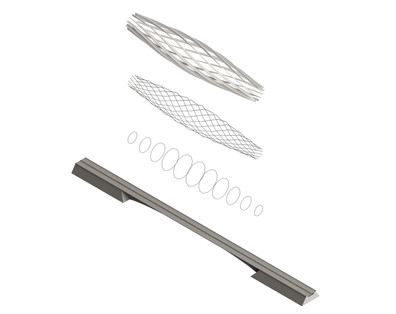
Exploded structural diagram and assembled view illustrating the bridge system.
The diagram shows the relationship between the primary curved ribs, secondary connecting members, and deck, highlighting how repetitive structural elements combine to form a continuous system spanning between abutments.


This proposal explores a more singular and legible structural expression, where the bridge is defined by a pair of sweeping primary arches that span continuously between abutments. The structure reduces the number of elements to emphasise clarity, calmness, and a strong horizontal presence within the landscape. The arches rise gently above the deck, carrying the primary loads while allowing the crossing to remain visually open and unobstructed. Secondary elements are minimised and carefully aligned to support the deck and maintain structural efficiency without competing with the primary form. By simplifying the structural system, the bridge reads as a clear and recognisable gesture across the water, balancing efficiency with a refined architectural identity. The form responds to the surrounding terrain through its low profile and smooth curvature, reinforcing continuity between landscape, structure, and movement.


